Really Good, Actually by Monica Heisey

Monica Heisey – who spent a spell as a screenwriter on cult sitcom Schitt’s Creek – has written her first novel called Really Good, Actually which has been praised for its wit by everyone from Rob Delaney to Dolly Alderton. Marian Keyes described it as “WILDLY funny and almost alarmingly relatable”.

The narrator is a 28-year-old PhD student called Maggie who lives in Toronto and decides to end her marriage to her husband Jon after 608 days. As she says, “I hadn’t lost my husband, I had left him. Or, rather, I had suggested he leave, and he had taken me up on this incredibly quickly. In many ways it was the last thing we agreed on.”

Heisey who herself got divorced at the same age, describes Maggie as looking like her and with the same postgraduate qualification in Shakespearean literature (a friend of Maggie’s describes her job as “you … explain Macbeth”) but Heisey has said that she wrote the book with enough distance for it not to be about her own experience.

continue reading
 

The Ascent by Stefan Hertmans

n 2000, the author Stefan Hertmans was disturbed to discover that the house in Ghent he had lived in for more than 20 years and restored from dilapidation had once been home to a Flemish collaborator with the SS, Willem Verhulst. On the pink and brown marble mantelpiece which Hertmans had become so fond of Verhulst had kept a bust of Hitler.

The fact that Hertmans would use this as a springboard to write a work of auto-fiction seems inevitable, given that his International Man Booker longlisted novel War and Turpentine (2016) and his later novel The Convert (2019), have their roots respectively in notebooks belonging to his grandfather and a historical essay about the village in Provence that Hertmans now lives in.

In The Ascent, which has been translated from the Dutch by David McKay, Hertmans draws on a memoir written by Verhulst’s historian son, but uses it not unquestioningly as he asks: ‘How much reality can a person bear, when the subject is his own father?’ 

continue reading
 

Milk Teeth by Jessica Andrews

Jessica Andrews’ debut novel Saltwater (2019) told the story of a young working-class woman from Sunderland making her way in London. Although her second novel, Milk Teeth, flits between Paris, Barcelona and rural Spain, as well as London and north-east England, it essentially returns to the same territory as her first.

This confidence in her material — in placing centre stage a young, unnamed northern woman living a precarious existence but struggling to carve out more space for herself — makes her work reminiscent of Gwendoline Riley, with a hopeful vulnerability in place of Riley’s occasionally caustic edge.

The protagonist dances between vulnerability and assertion as she attempts to grapple with her desire to maltreat her own body In fact, the sincerity of Andrews’ writing is so unusually raw that at first it can seem embarrassing.

continue reading
 

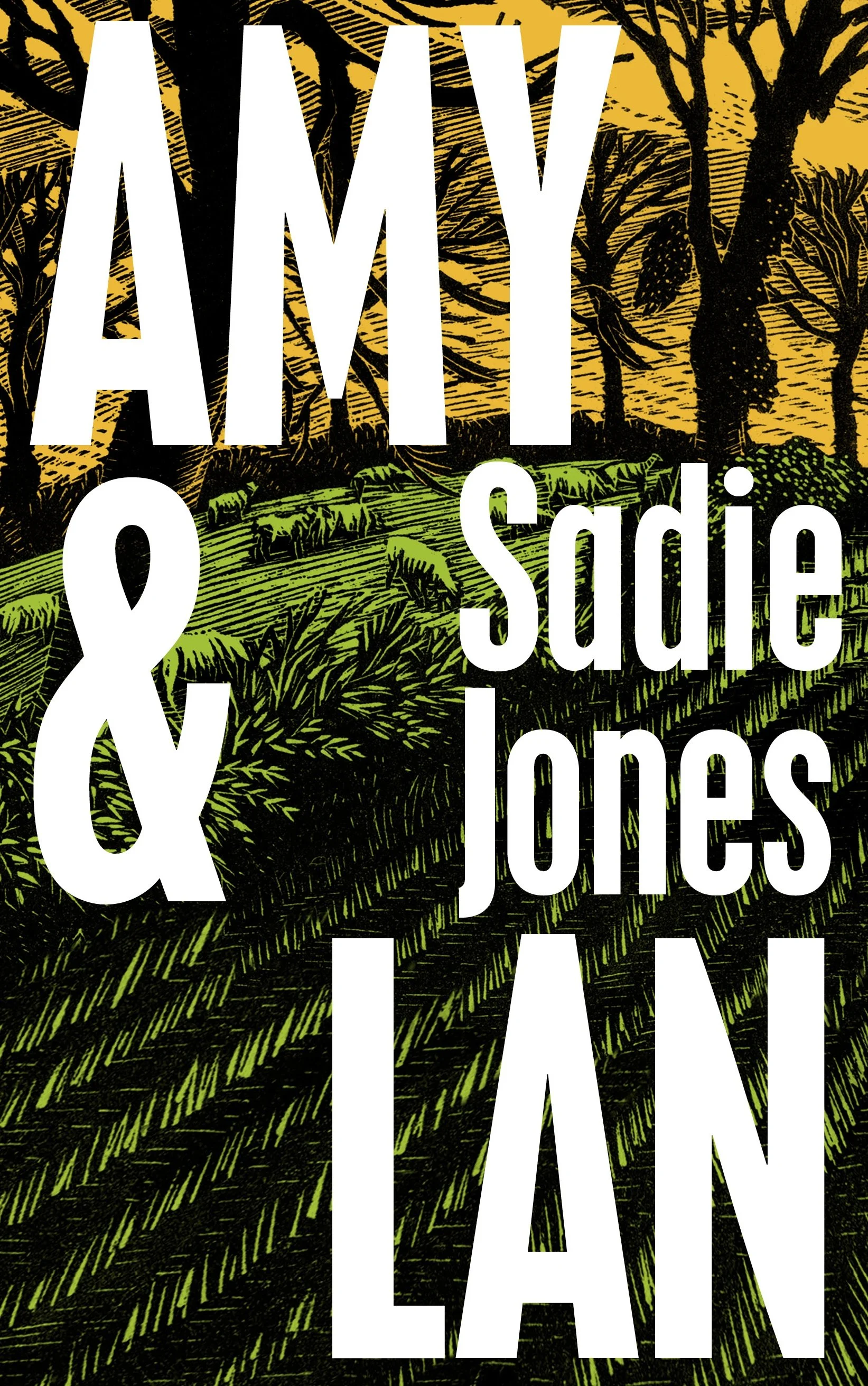
Amy & Lan by Sadie Jones

Sadie Jones’s Costa award-winning first novel The Outcast (2008) told the story of a sensitive 10-year-old boy in the 1940s whose mother drowns when the two of them are having a picnic and whose repressed father is utterly unable to help him cope with his grief.

Since then, Jones has covered marital rape in 1950s Cyprus in Small Wars (2009); Edwardian society in The Uninvited Guests (2011); 1970s theatreland in Fallout (2014) and serious dysfunction in a contemporary wealthy family in The Snakes (2019).

In Amy & Lan, Jones’s sixth novel, she returns to the child’s eye view but with a far less obviously tragic narrative than in her debut Amy and Lan are friends growing up with their respective families on a Herefordshire small holding – the novel follows them from the age of seven in 2005 to 12 in 2010.

They are blissfully happy living on Frith Farm, feeding chickens, baling hay and naming calves.

continue reading
 

Nonfiction by Julie Myerson

Julie Myerson has, somewhat confusingly, written a novel called Nonfiction. The confusion of course is the point, because this is her squarest attempt so far at auto-biographical fiction. The French author Serge Doubrovsky is widely credited with writing the first ‘autofiction’ when he published Fils in 1977. Autobiographical novels have proliferated ever since, notably by Karl Ove Knausgaard, Rachel Cusk and Edward St Aubyn. Hari Kunzru, when asked to discuss similarities between himself and his protagonist in Red Pill (2020), said: ‘It was just the simplest solution to a set of problems to give him the furniture of my biography.’

Myerson’s narrator is a novelist whose father dies by suicide and who has a child with a drugs problem. (The furore in 2009 over Myerson’s The Lost Child, partly about her eldest son’s skunk habit, was so great that a sympathetic journalist summed up the pre-publication reaction in an article entitled ‘Hating Julie Myerson’.)

continue reading
 

The School for Good Mothers by jessamine chan

Frida Liu, the 39-year-old mother of a toddler named Harriet, has a very bad day which will haunt her for the length of this novel. She is divorced from Harriet’s father, a middle-aged man called Gust who has left her for a 28-year-old Pilates instructor called Susanna. Harriet will only fall asleep, Frida explains, ‘if I’m holding her hand’. As a consequence, Frida herself has been averaging two hours sleep a night when she finally cracks and decides to leave her daughter unattended so that she can collect some papers from her work place. After her neighbours hear the child crying they call the police and Harriet goes to live with Gust and Susanna. Child protection services install cameras in all the rooms of Frida’s home except the bathroom, but her efforts to change count against her. When she begins to clean her apartment scrupulously, they question why she wasn’t able to do this before.

Frida is sent to a corrective facility for a year, where she will be taught to erase all aspects of her identity that may interfere with being a good mother.

continue reading