I, Julian by Claire Gilbert

Claire Gilbert considers Julian of Norwich to be the mother of English literature, and believes she should stand alongside Chaucer. What seems indisputable is that Julian was the author of the first work written in English by a woman. This rather wonderful fictional autobiography was published to coincide with the 650th anniversary of Julian first experiencing, in May 1373, the series of 16 visions she wrote about in Revelations of Divine Love. It comes garlanded with praise from, among others, Jeremy Irons and Rowan Williams, the former Archbishop of Canterbury.

In Gilbert’s account, Julian was just a child when she watched her father, a Norwich wool merchant, die in agony from the plague, and when her visions begin she assumes she too is dying of the pestilence – as her husband and daughter have done. Gilbert uses her own experience of cancer – in particular the dreadful constipation she endured as a result of the anti-sickness medication she was prescribed – to evoke Julian’s ordeal of bodily pain.

continue reading
 

The Guest by Emma Cline

Emma Cline’s smash hit first novel, The Girls, was the biggest-selling hardback debut novel of 2016 and attracted fans as diverse as Lena Dunham and Richard Ford. A collection of short stories entitled Daddy came next but there hasn’t been another novel until now. The Guest is tighter in focus than The Girls – the latter had a double time-frame and beautifully delineated the experience of girls at the fringes of a Manson-like cult. The Guest is about one woman, 22-year-old Alex, who is staying with an older man, Simon, on the East Coast.

Cline is a peerlessly confident writer and avoids any obvious exposition so we don’t know exactly how Alex ended up at Simon’s house or why she wants to be there but we can guess. We do know that her roommates kicked her out of her apartment for stealing and not paying her rent. There are various hotels and restaurants she is not welcome at and she owes money to a man disturbingly named Dom – whose incensed messages flicker on her rarely functioning mobile phone.


continue reading
 

The Sleep Watcher by Rowan Hisayo Buchanan

The Sleep Watcher, the third thoughtful novel by the gifted Rowan Hisayo Buchanan, features a narrator who floats free from her body at night and circles around invisibly, observing her family and friends. This departure into the supernatural from the author’s previous work does not leaven the sadness of her writing, and the book is even more melancholic than her Starling Days (2019), which opened with the protagonist contemplating suicide.  

Sixteen-year-old Katherine, or Kit as she is known, does not always like what she sees as she wanders about unobserved – though it does allow for some moments of comedy. She lives with her parents, F and M, and her younger brother Leo in a seaside town, working at the local museum in the holidays before her A-levels begin, and has a gentle boyfriend, Andrew, who likes drawing comic-book-style pictures of kraken. 

There’s an underlying violence to her parents’ relationship which Kit can’t quite fathom, even after she begins observing them at night during her ‘sleep watching’.

continue reading
 

Spring Reads 2023

Spring has sprung and along with the crocuses, you will need something decent to read and for once, there is a fecund crop of upcoming new books to choose from.

From ex-aide Cleo Watson’s “sex and skulduggery” romp in Westminster, Whips, to Max Porter’s latest, there should be something to suit all tastes.

1. Big Swiss by Jen Beagin

Big Swiss is currently being turned in to HBO series starring Jodie Comer and it has a very juicy premise indeed. Greta works as a transcriber for a sex therapist and she becomes particularly fascinated by one client who has never had an orgasm and whom she nicknames ‘Big Swiss’ (Comer plays her) and later meets in the dog park. The two women embark on a passionate affair that flips upside down what they think about fidelity, honesty and also, donkeys.

continue reading
 

Good Girls by Hadley Freeman

The journalist Hadley Freeman’s last book, House Of Glass, was a clear-eyed memoir of her paternal family’s experience of the Holocaust. If anything, Good Girls is an even more personal book as it is a lacerating account of the two-and-a-half years she spent as a teenager in and out of psychiatric wards, being treated for anorexia. Some of these sections are genuinely hard to read but will provide the only insight many of us have into a devastating mental illness. Good Girls is also a study of what anorexia is, who gets it and how it is treated and, as such, Freeman (left) talks to experts and former fellow patients as well as their families. While her writing is never less than compelling, the memoir and the more objective aspect of the book don’t always meld successfully, and at one point the whole threatens to be derailed by her exploration of the parallels between anorexia and gender dysphoria.

But Good Girls is nonetheless a valuable examination of what can fuel adolescent self-starvation and how one individual managed to outgrow it.


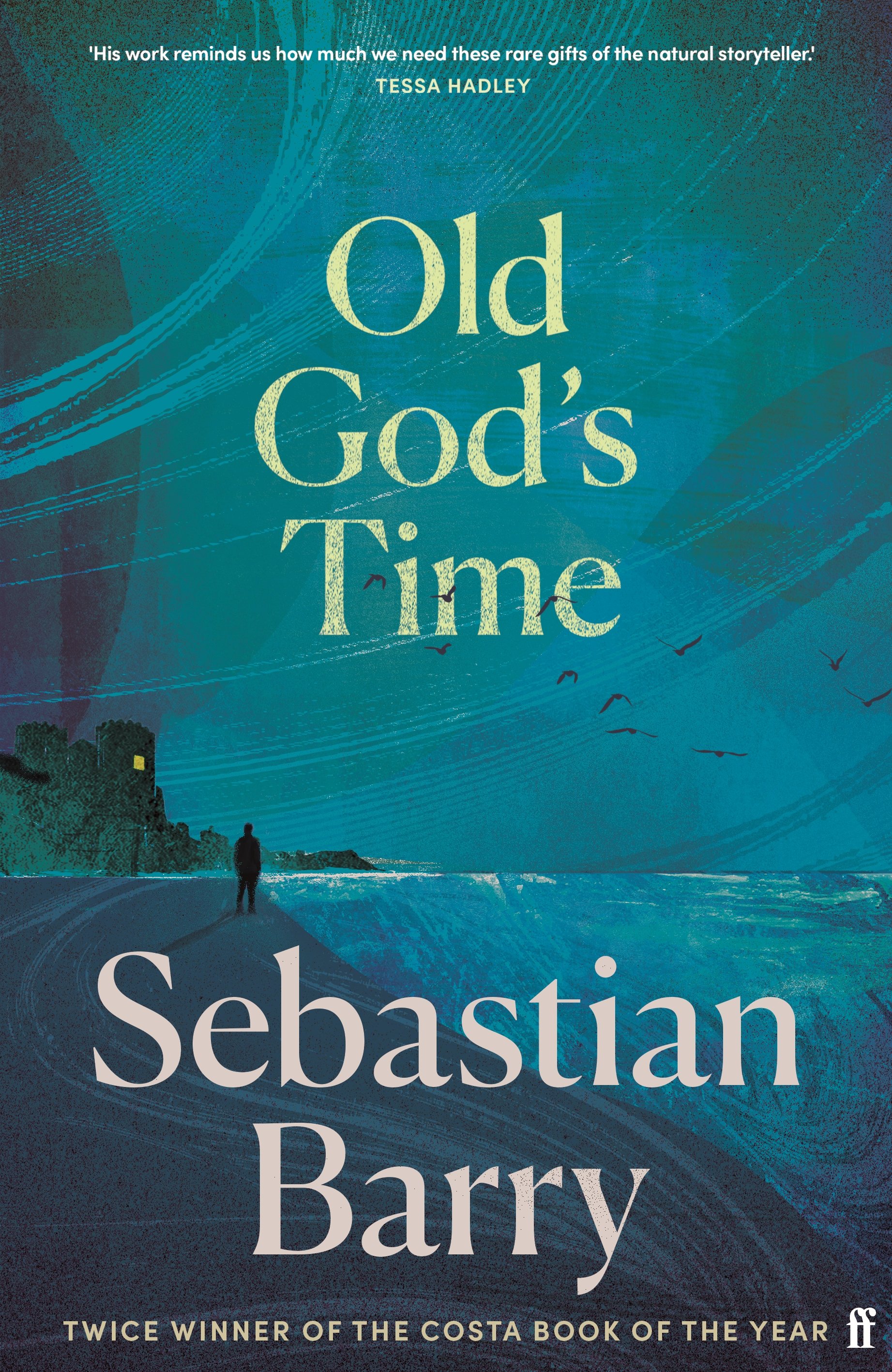
Old God's Time by Sebastian Barry

Nothing is quite what it seems in Sebastian Barry’s latest novel, and that isn’t meant entirely as a compliment. While Old God’s Time is a powerful story, I will surely not be the only reader who’s occasionally baffled by its cast of ghosts presented initially as living people. After 200 pages, I lost count of the number of times one character explains to another that the person they think they have just seen is actually dead.

The protagonist is the recently retired and somewhat haunted policeman Tom Kettle, who feels ‘his pension was his gun, his weapon against work’. He now lives in a lean-to annex of a Victorian castle in Dalkey, overlooking the Irish Sea, where he catches only glimpses of his landlord and neighbours. The arrival of two former colleagues at his door disturbs this placid existence.

The policemen want his help with an unsolved murder that he had worked on 30 years earlier, in the 1960s

continue reading