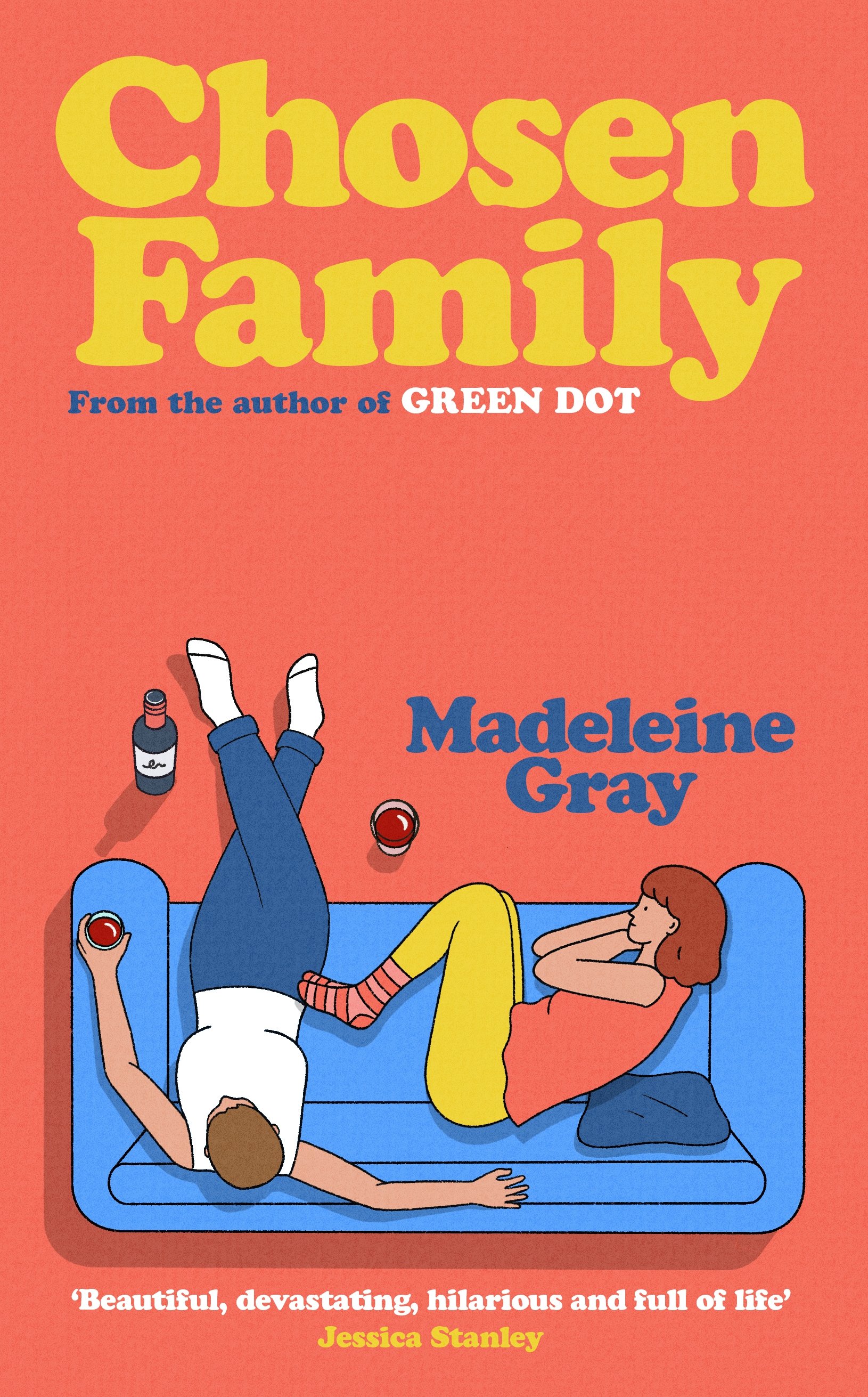
Chosen Family by Madeleine Gray

Madeleine Gray’s first novel Green Dot (2023) was a witty account of a messy office affair whose fans included Nigella Lawson and Gillian Anderson. Her follow up, Chosen Family, is an altogether more expansive book. She has said described it as “the result of years of thinking obsessively about two things for a long time. First, why is it that every queer person I know (including me) has a story about having an intense friendship breakup in high school that years later they realise was probably their queer root? […] Two, why do more people not choose to have children with their platonic best friends? Surely raising a child with someone you trust implicitly and don’t have sex with makes more sense than the other way round?”

The novel is set in Sydney and has a dual timeline, spanning 18 years between the school days of Eve and Nell to their adulthood and becoming parents. In 2006, Nell “does not enjoy being twelve years old. Adults around her are always telling her that she’s too smart for her age. Nell often finds it difficult to tell these adults that they are too old to be so stupid.”
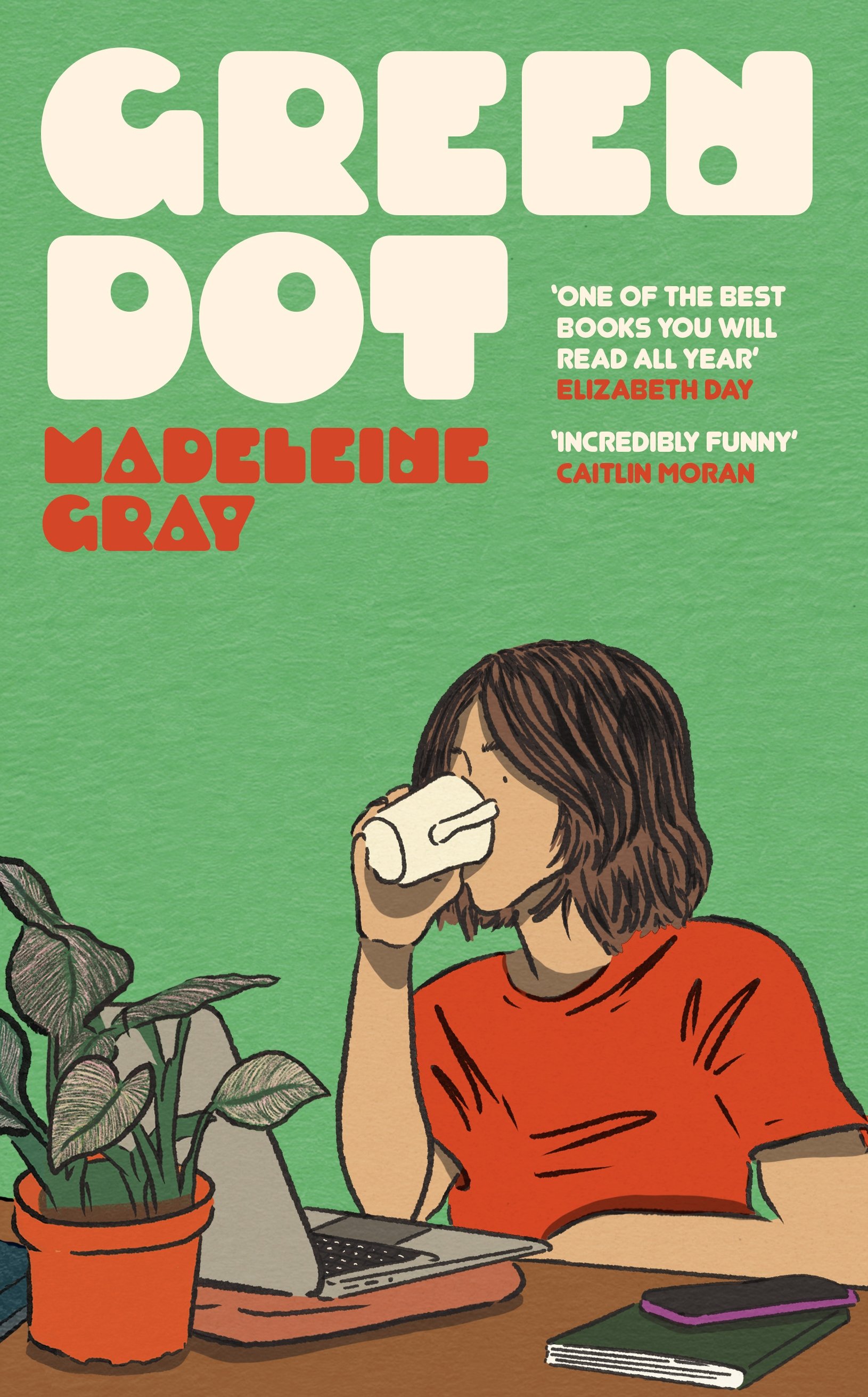
 

Green Dot by Madeleine Gray

Hera, the heroine of Madeleine Gray’s first novel, is 24, which, as she says, ‘seems young to most people but not to people in their mid-twenties’. She lives in Sydney with her father and their dog and works as an online community moderator, but the contents of her work bag reveal her to be Bridget Jones’s edgier little sister: ‘My wallet, three pairs of underpants, headphones, nine tampons, a travel vibrator, two novels, a notebook, two beer caps, a bottle of sake and a fountain pen.’ She will also inevitably be compared to Hannah from Lena Dunham’s Girls and to Phoebe Waller-Bridge’s Fleabag.

Gray’s writing style is droll but if Hera’s internal monologue sounds gauche and affected, it is useful to remember what the average 24-year-old sounds like. When she tells her closest friends her feelings, she reflects to herself: ‘I’ll speak it now and work out if it’s honest later.’ Her cynical schtick is not always palatable, particularly when she describes a colleague as having ‘the embodied exhaustion of a Holocaust museum tour guide’.